
Solomon’s knot crochet stitch originated in the 19th century. This interesting classic crochet stitch is also called the lover’s knot, hailstone stitch, true lover’s knot, or knot stitch in the crochet community.
As illustrated, Solomon’s knot creates an open, stretchy, lacy fabric using long pulled-up loops secured with single crochets. Interestingly, its name comes from the ancient geometric design known as Solomon’s knot, which symbolizes eternity and wisdom.
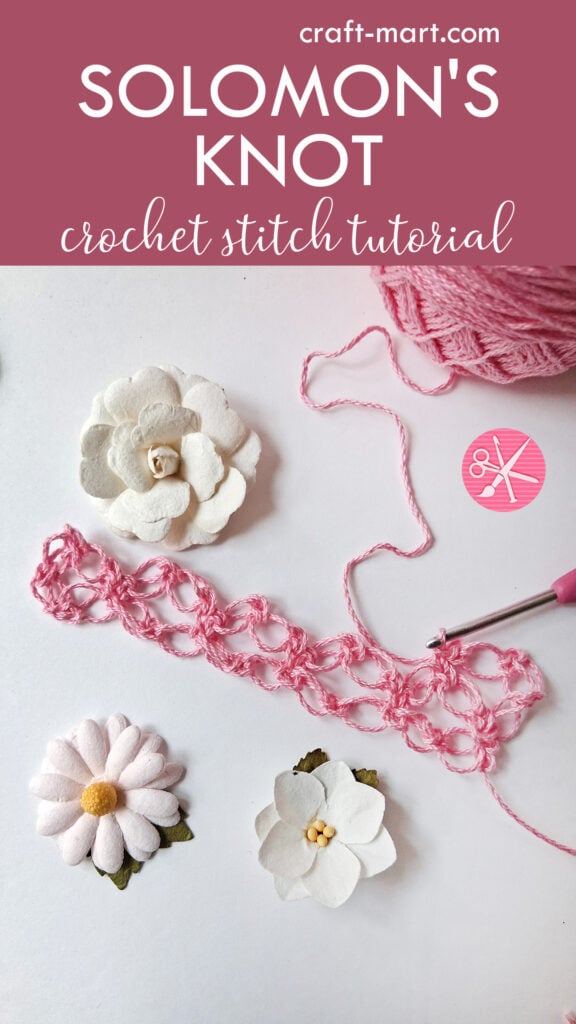
I must confess, for the longest time, the Solomon’s knot stitch looked intimidating. But then something clicked, and I can’t get enough of it.
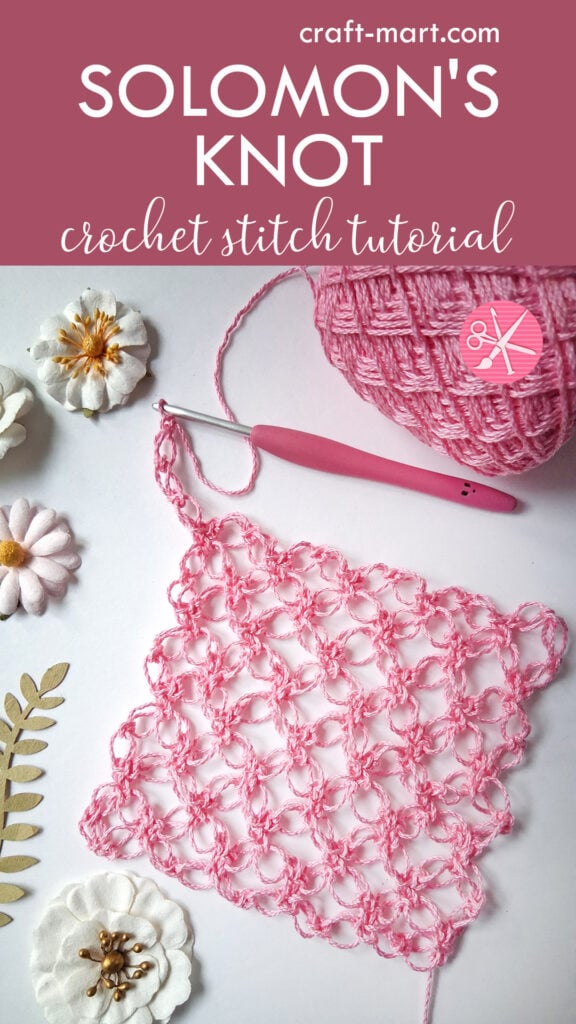
So, let’s try to make you fall in love with this crochet stitch. After all, it consists of single crochet stitches and pulled loops!
Supplies for Solomon’s Knot Crochet Tutorial
Firstly, to practice Solomon’s knot crochet stitch, pick yarn with good stitch definition. Cotton and cotton blends look crisp and prevent these elongated loops from looking sloppy.
For this tutorial, we used 100% cotton yarn, size 8, 1.76 Oz, 120.84 yards, soft and smooth, which worked perfectly. Most importantly, it comes in 7 different colors, so you can pick your favorite.
Secondly, pick a crochet hook that works with your chosen yarn. For achieving the desired stitch definition, it needs to work well with your individual tension.
Solomon’s Knot Tutorial
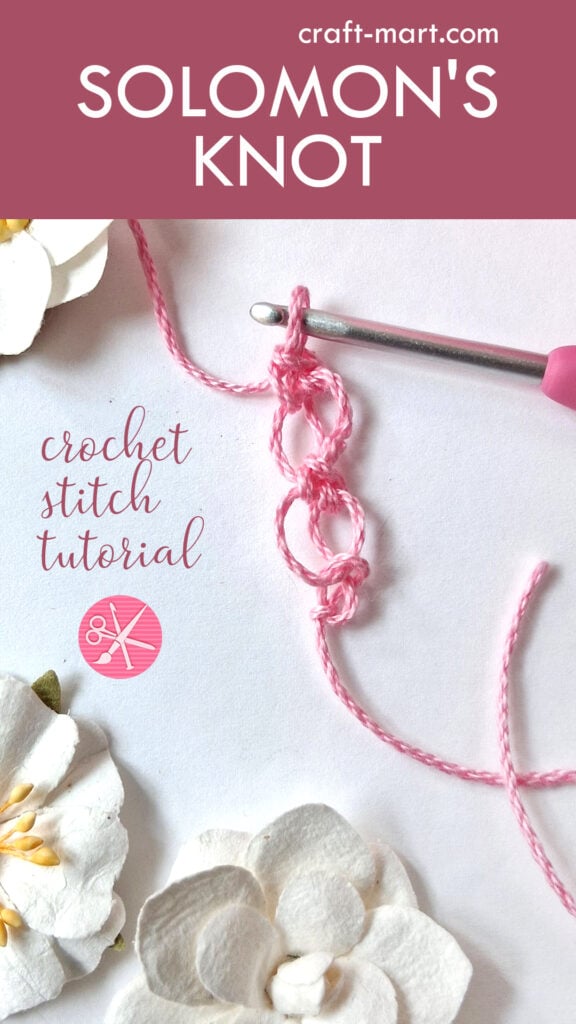
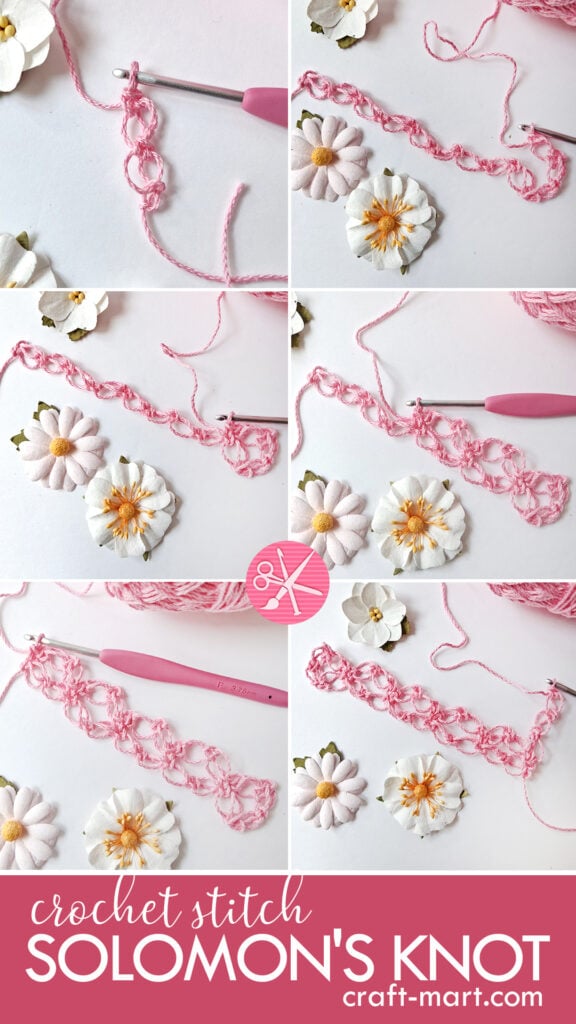
- Step 1: Start with a standard slip knot.
- Step 2: Chain 1.
- Step 3: Pull the loop with your hook to your desired length (~ 0.5 inches or less).
- Step 4: Yarn over and pull the yarn through the long loop.
- Step 5: When you check the long loop, you’ll see a single back strand separated from two front strands. Insert your hook under that single back strand.
- Step 6: Yarn over and pull up a normal-sized loop; yarn over and pull through 2 loops. You made a SC (single crochet) that secures the Solomon’s knot.
You’ve completed the first Solomon’s knot. Next, repeat steps 3-5 to crochet a second Solomon’s knot.
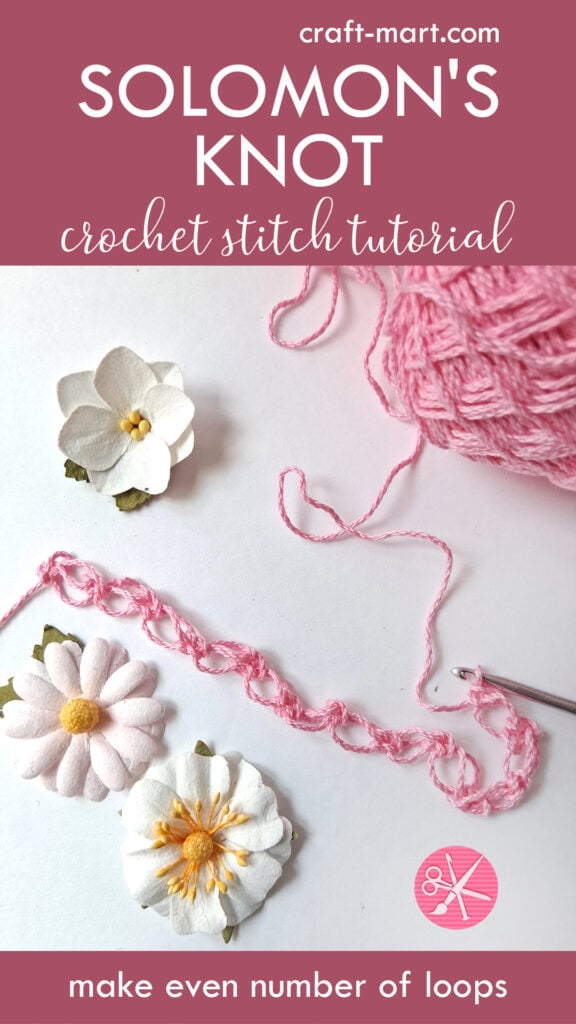
To create a foundation row of chains, create any even number of Solomon’s knots – 12 knots in our example.
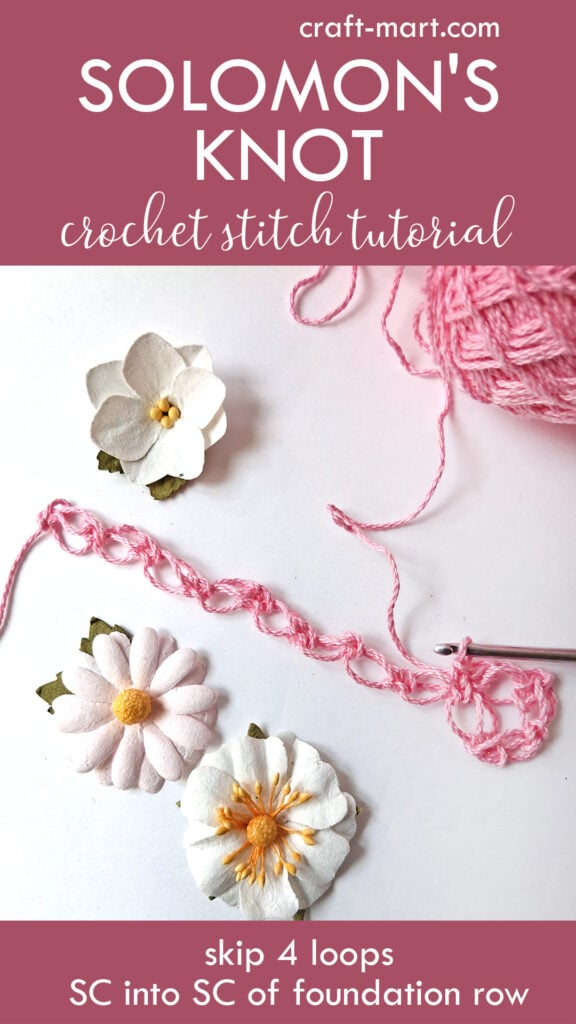
Now we are starting the next row (after completing the foundation row). Skip 4 loops and make a SC (single crochet on top of the SC of the foundation row.
Next, repeat steps 3-5 from above TWICE to create two Solomon’s knots. Skip 2 foundation loops. Make a SC (single crochet) into the SC of the foundation row.
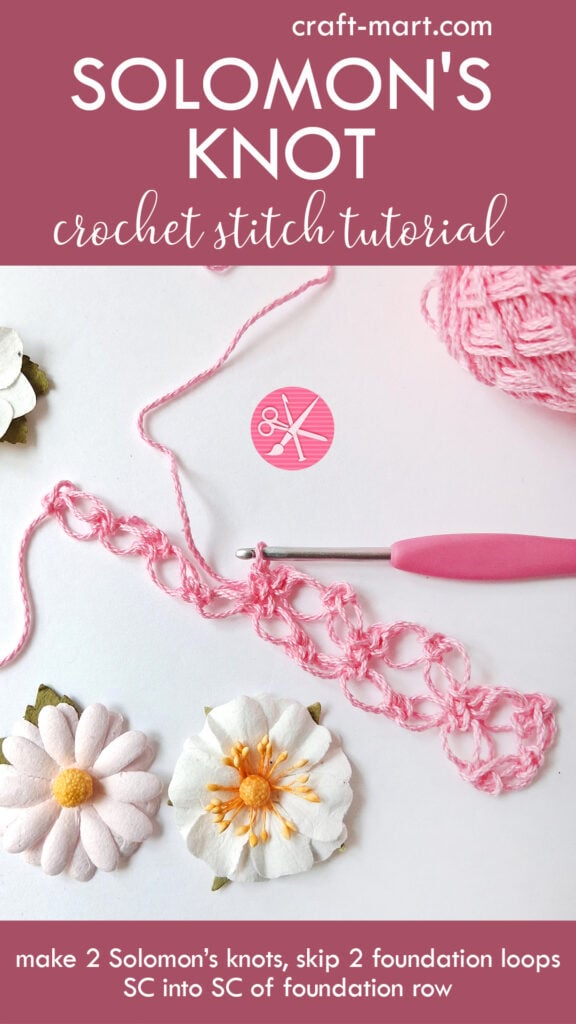
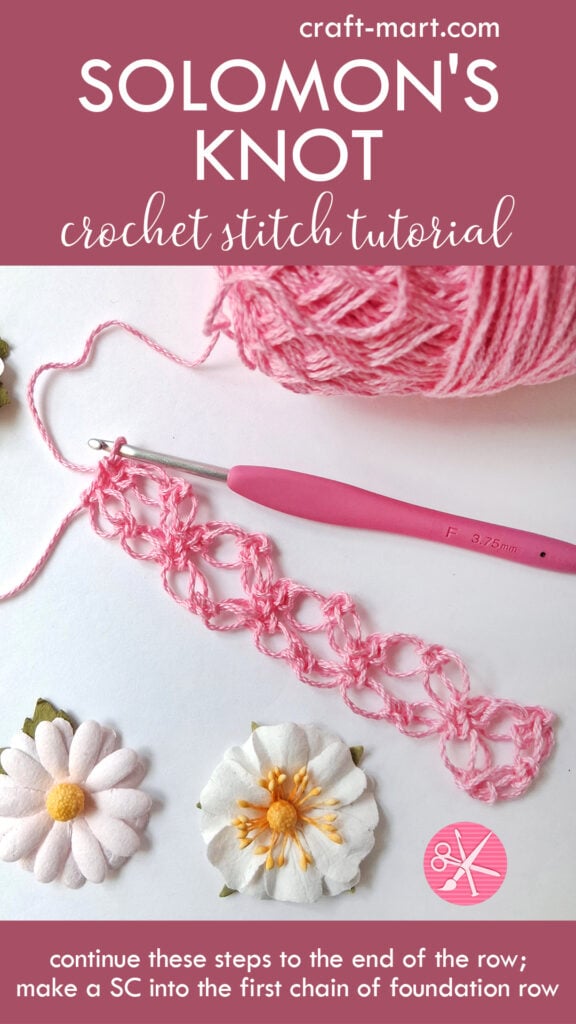
Continue these steps to the end of the row until you make a SC into the first chain. You’ll have 10 Solomon’s knots and 5 single crochet stitches in your row.
Third Row (and all the rows) of Solomon’s Knot Tutorial
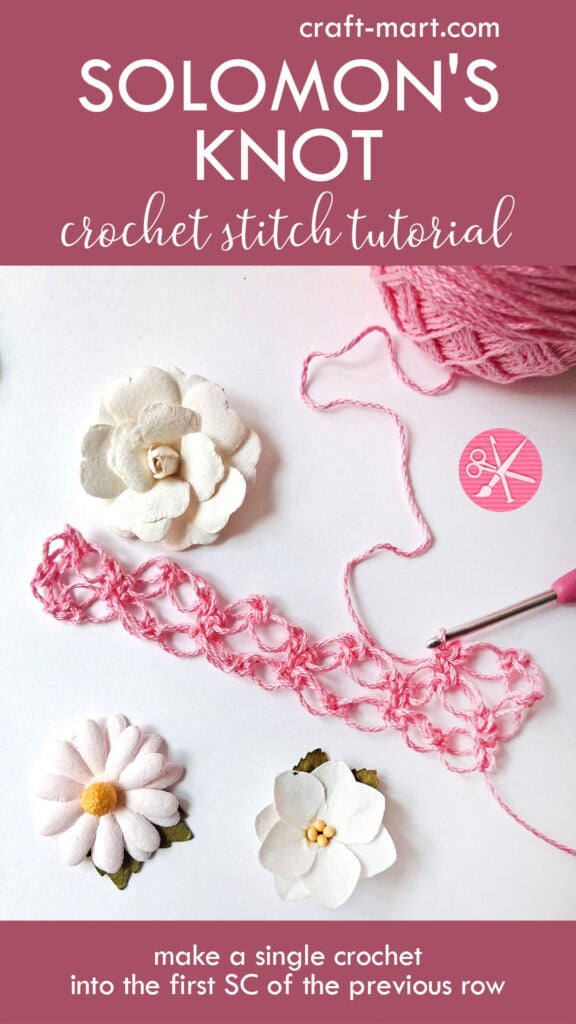
To start the 3rd row (and all subsequent rows), make 3 Solomon’s knots. Next, make a single crochet into the first SC of the previous row.
Of course, repetition makes it perfect. After the first few loops, the hands begin to recognize the pattern before the brain has to work hard at it. It starts to feel less like learning a complicated stitch and more like settling into a steady sequence.
Also, the openness of the stitch makes the structure easier to see as you crochet. You’re not trying to decode a crowded row of tight stitches or hunt for hidden spaces. The design almost guides your eye, which can make the learning curve feel less steep than expected.
And once you see that the elegance comes from repetition rather than complexity, the stitch starts to feel much less mysterious. That becomes even clearer when you break it down into the simple, repeatable rhythm that makes Solomon’s Knot surprisingly beginner-friendly.
Mastering Solomon’s Knot Stitch
So, don’t be discouraged if you have to unravel some of your stitches in the beginning. As you practice, your loops will become more precise, resulting in a beautiful airy texture.
This delicate stitch may seem easy, but it requires attention and a little challenge – something we all need in life. And the payoff is worth it: you’ll create a stunning texture using one of the oldest crochet stitches.
Once you get the hang of the basic motion, this stitch truly shines in projects that showcase its light and open texture. Summer tops and shawls are perfect for this stitch because they have simple shapes.
So keep practicing, and soon you’ll be creating gorgeous, intricate pieces with ease using beautiful Solomon’s knot.
